Thursday, On Foot
The second habit begins where the first one stops: at the front door, list folded in a pocket, an empty bag over one shoulder. Choose a day, choose a route, and walk to the shop.
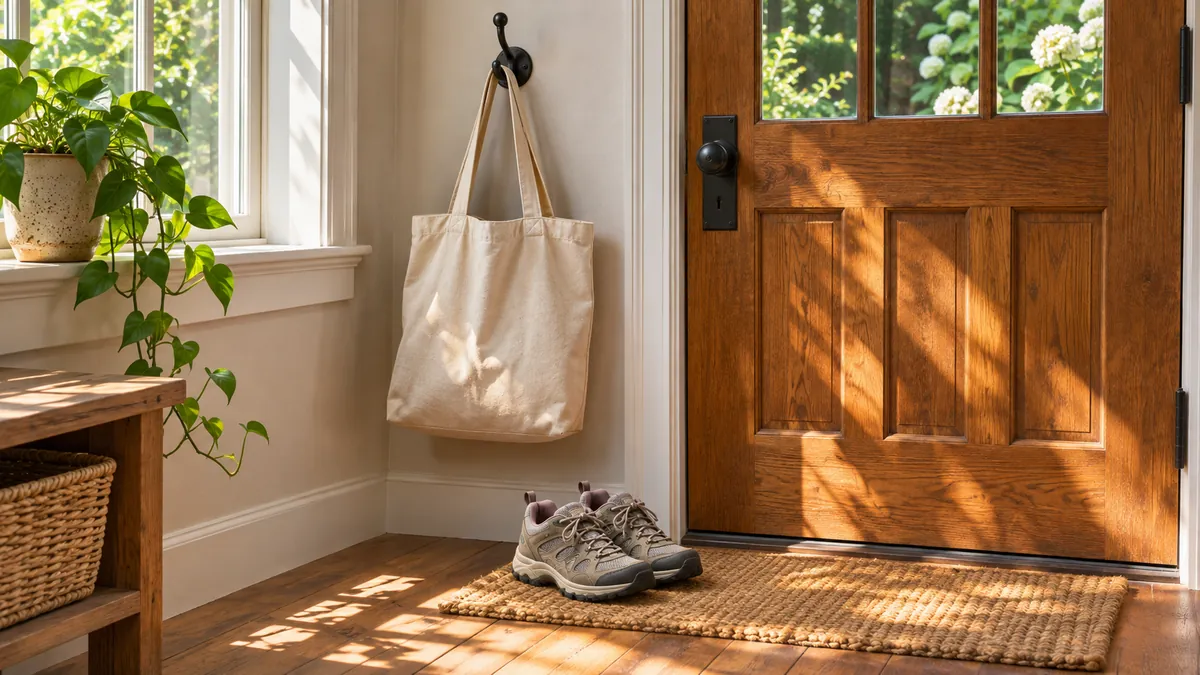
One day, one route
Doing the same errand on the same day every week gives the week a fixed point to hang things on. Thursday is arbitrary; Monday or Saturday works just as well, provided it stays put. A standing errand on a standing day does for your calendar what a hook beside the door does for your keys: it gives something a place where it can always be found.
Walk, if the distance and your knees allow it. The pace does not need to be brisk, only steady and long enough that you arrive a little warm. Studies of grown men and women have often found that regular walking goes along with feeling more alert and better able to concentrate, although nobody can promise what one particular walk will do for one particular person. What the walk certainly does is put twenty unhurried minutes between you and every screen in the house, which is a rarer thing than it ought to be.
Keep the route the same for a month before changing anything. Sameness is not boredom here; it is the background against which the next exercise becomes possible.
Noticing what changed
When the route stays the same, change stands out. A new fence around the corner house, a shuttered bakery, the tree on the corner that drops its leaves a week ahead of its neighbors, a bicycle chained to the same post three Thursdays running and then gone. Make a small game of it: on the walk home, name three things that differ from last week. Say them out loud if nobody is near, or jot them on the back of the list once you are in the kitchen again.
Attending on purpose works like a muscle you only notice once it has gone soft from disuse. Many of us move through familiar streets on a kind of autopilot, arriving with no memory of the trip. Asking yourself to report three differences pulls you off that autopilot for the length of a walk, and over a season it tends to sharpen the eye for detail in other settings too: the misplaced folder, the reading glasses left on the wrong shelf, the car parked a row away from where you thought.
A few words at the register
The shop itself offers one more exercise, and it is the friendliest of the lot. Learn the name of whoever usually rings you up, and one thing they told you last week. The new grandchild, the trip back home, the sore shoulder. Then ask about it.
It feels like small talk, and it is, but it also asks the head to file a name together with a detail and fetch both a week later, in real time, with a person waiting. People who keep up regular conversation with others, even brief ones, generally report feeling more engaged with their days, and a standing chat at a counter is about the easiest kind of company to keep. From our side of the counter, the customers who ask after us by name are the ones we remember best as well.
Carrying it home
On the way back, try one more small thing: recite the list in reverse, last item first. It is harder than it sounds and slightly comic, and it makes the head handle the same words in a fresh order, which is good practice of its own. Then unpack, cross off, and hang the bag back on its hook for next week.
A heavier bag also changes the walk home. You slow down, you shift the weight from one shoulder to the other, you pick the shady side of the street. Use that slower pace. Run back over the three changes you spotted on the way out and attach each one to something you already know: the new fence went up at the house where the dog barks, the closed bakery sat next to the shoe repair, the early tree is the one by the bus stop. Pinning a new detail to an old one is how most of us remember anything at all, and the walk home is a patient place to do it.
Once inside, before the bag is even empty, write the three changes on the back of the old list. In a month you will have a small chronicle of your own street, kept in pencil, and reading it back is a pleasant test of how much of it you can still picture.
When the weather or the knees say no
Rain, ice, a bad week for the hips: take the bus or the car, and keep everything else. The same day, the list tried from memory before you look, the three changes noticed through a window, the name at the register, the list said backward on the drive home. If walking is hard in general, a shorter route or a single lap around the block before getting into the car still keeps the shape of the habit, and shape is most of what a habit is.